Oven for Bakery: How to Choose the Right Commercial Baking Oven
The right oven is not simply the largest or most expensive machine. It is the oven that matches your products, daily output, tray format, available utilities and bakery workflow. This practical guide compares the main commercial oven types and helps bakery owners, equipment dealers and project contractors prepare a more accurate equipment request.
Quick answer: which oven is best for a bakery?
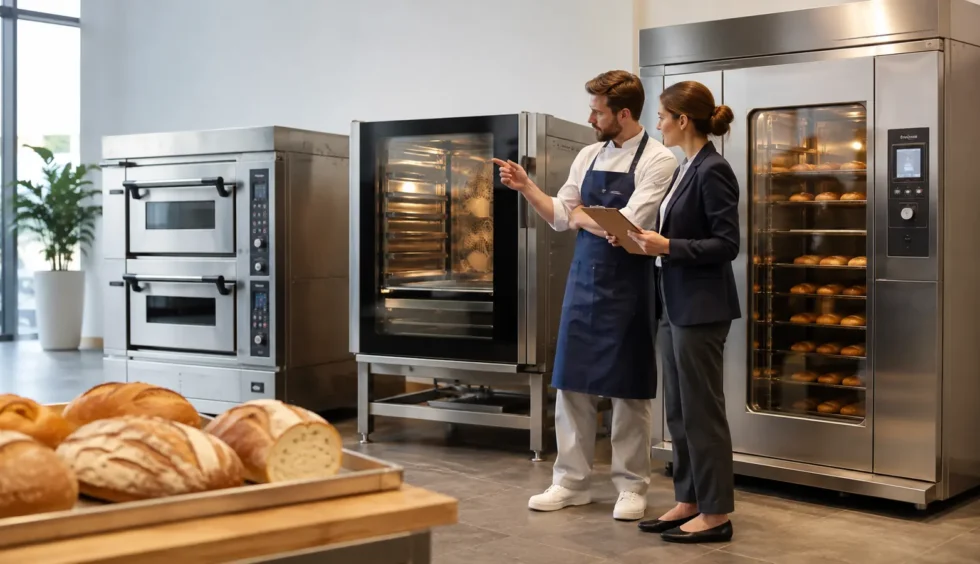
A deck oven is a strong starting point for artisan bread, baguettes and products that benefit from controlled top and bottom heat. A convection oven is well suited to pastries, rolls, cookies and multi-tray production that needs active airflow. A combination oven supports bakeries with a mixed menu or limited floor space. A rotary rack oven is normally considered when batch size and high-volume consistency become the priority.
That answer still needs to be checked against tray size, output per shift, steam requirements, power or gas supply, room dimensions, ventilation and destination-market compliance.
Start with five practical questions
Searches for an oven for bakery often lead to long product lists. That is useful only after the bakery has defined what the equipment must do. A dealer or manufacturer can recommend a model more accurately when the following five points are clear.
ProductsBread, baguettes, pastries, cakes, cookies, pizza or a mixed menu
OutputTrays or kilograms per batch, batches per hour and working shifts
Tray formatTray dimensions, number of trays and rack or deck loading method
UtilitiesVoltage, phase, available power, gas type, water, drainage and exhaust
SiteDoorway, ceiling, working clearance, ventilation and final installation position
1. What will you bake?
Product mix affects heat transfer, airflow and steam requirements. Crust-focused breads may benefit from the static baking atmosphere and independently controlled decks of a deck oven. Pastries and small items often benefit from controlled hot-air circulation. A bakery producing both product families may need more than one oven type or a stacked combination.
2. What is the required output?
Define output in a way that can be checked: pieces per batch, tray quantity, product weight, baking time and batches per shift. “Large capacity” is too vague. The same six-tray oven can produce very different hourly output depending on the product, loading density, baking profile and recovery time between batches.
3. Which tray or rack format do you already use?
BRESSO’s HBDO, HBWO and HCV product pages list configurations based on 600 × 400 mm trays. If the bakery uses another pan format, the actual usable chamber dimensions and tray clearance should be checked before ordering. Do not assume that an outside dimension or a model name guarantees compatibility.
4. Which utilities are available?
Confirm voltage, phase and available electrical load at the installation point. For gas equipment, confirm gas type, pressure and local connection requirements. Ovens with steam may also require a water supply and drainage. The final specification should be reviewed by the equipment supplier and a qualified local installer.
5. How will the oven enter and fit the bakery?
Measure the complete delivery path—not only the final position. Check gates, elevators, corridors, doors and turning space. Inside the bakery, reserve the manufacturer-required clearance for operation, service and ventilation. A technically suitable oven can still become the wrong purchase if it cannot be delivered or serviced efficiently.
Commercial oven types compared
| Oven type | Typical product fit | How it bakes | Main reason to choose | Check before buying |
|---|---|---|---|---|
| Deck oven | Artisan bread, baguettes, rolls, pizza and products needing controlled deck heat | Static chamber with radiant and conducted heat; decks may be controlled independently | Direct control of top and bottom heat; stone slab and steam options may be available | Deck count, chamber height, tray layout, stone option, steam, water and drainage |
| Convection oven | Croissants, pastries, cookies, pies, rolls and varied tray-baked products | Fans circulate heated air around multiple trays | Active airflow and practical multi-tray production | Tray spacing, fan design, steam, core temperature control and available electrical load |
| Combination oven | Mixed menus and bakeries that need different baking methods in a compact arrangement | Combines deck, convection and—in some configurations—proofing functions | More production functions within one equipment stack | Exact module combination, utility demand, working height and service access |
| Rotary rack oven | High-volume bread, rolls, toast and other rack-loaded production | Hot air circulates while the rack rotates inside the chamber | Large batch loading and consistent exposure across the rack | Rack and tray format, floor loading, gas or electric configuration, exhaust, steam and installation space |
There is no universal “best oven for bakery business.” The better choice is the configuration that produces the required product quality at the planned output while fitting the site’s utilities, workflow and maintenance capability.
How BRESSO oven options fit different bakery needs
BRESSO traces its baking-equipment history to 1991 and offers deck, convection, combination and rotary oven options. The following examples use information currently published on the corresponding BRESSO product pages. Final specifications should always be confirmed for the exact model, configuration and destination country.
Bakery Deck Oven HBDO
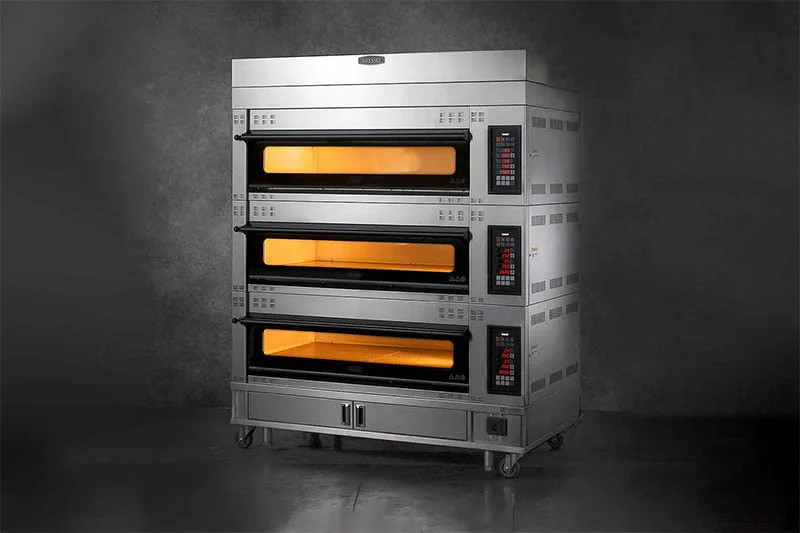
The HBDO range lists 6-, 9-, 12- and 16-tray configurations across the HBDO-2003, HBDO-3003, HBDO-4003 and HBDO-4004 models. Published features include individually configured decks, IBS infrared technology, LOW-E tempered glass, and optional stone slab and steam apparatus.
European W Deck Oven HBWO
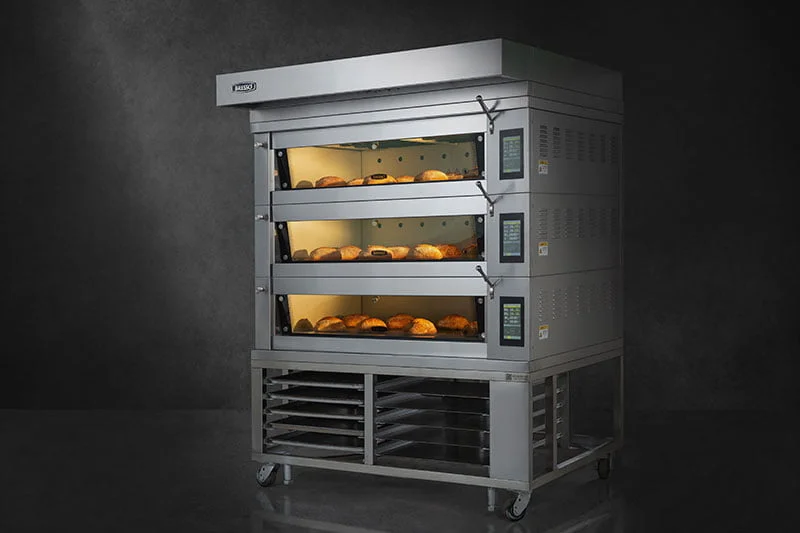
The HBWO range also lists 6-, 9-, 12- and 16-tray arrangements using 600 × 400 mm trays. Its published options include imported stone slabs, steam apparatus and separate deck configurations, making it relevant when a bakery wants controlled deck baking for a broad bread range.
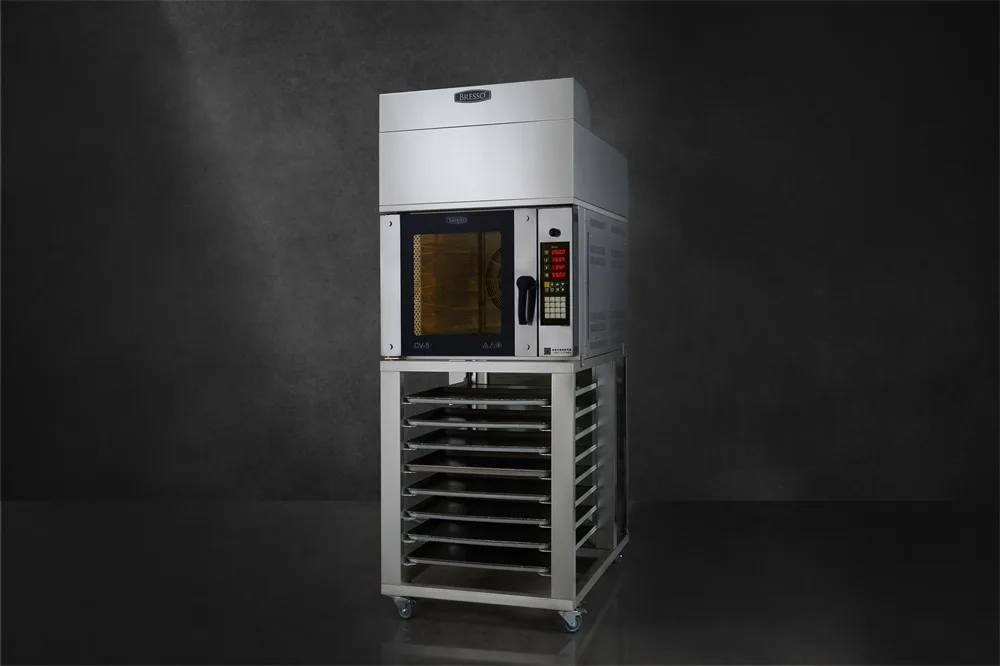
HCV Convection Oven
The HCV-5 and HCV-10 are listed for five and ten 600 × 400 mm trays. BRESSO publishes an advanced steam system, full-touch controls, an accurate temperature sensor and clockwise/anti-clockwise fan rotation among the HCV features. The product page states that a water pipe is required.
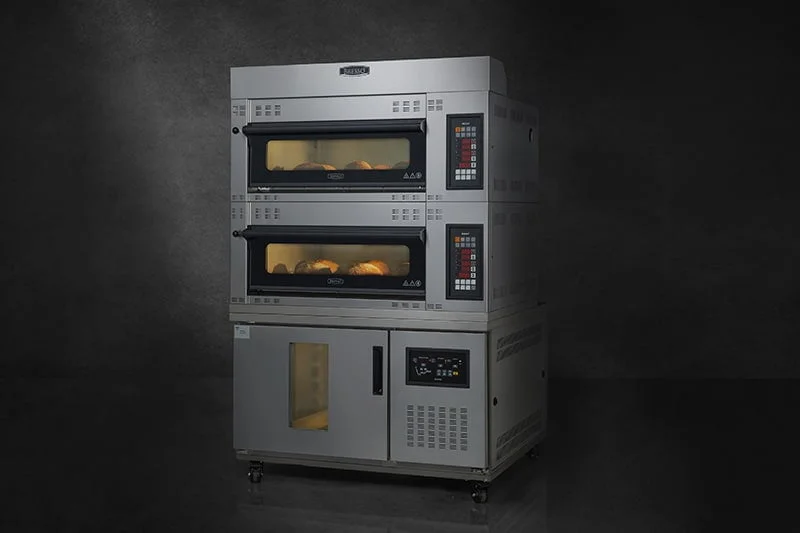
Combination Oven HBDO
The combination range brings deck, convection and proofer modules into one vertical equipment arrangement. For example, the HBDO-2510 listing combines a two-tray deck section, a five-tray HCV convection section and a ten-tray refrigerated proofer. Confirm the exact module combination and total utility requirements before planning the site.

BRESSO Rotary Oven
BRESSO lists electric HBCV-3201E and gas HBCV-3201G variants. Published features include an LCD touch-screen control panel, product memory, LOW-E insulating glass, infrared heating, hot-air circulation and steam. Confirm rack capacity, tray format, gas details and installation requirements for the ordered configuration.
Compare BRESSO bakery ovens
Dealers, equipment suppliers, bakery chains and project contractors can review the current oven portfolio and then request a model-level recommendation. Supplying complete project information at the start helps reduce avoidable specification revisions.
View available downloads or contact BRESSO with your project details.
Do not select an oven before checking utilities and installation
Electrical supply
The HBDO, HBWO and HCV product pages list 380 V or customized voltage options, but the total load varies significantly by model and module combination. A local electrician should verify the available supply, phase, protection and cable requirements against the confirmed equipment specification.
Water, drainage and steam
Steam-equipped ovens may need a water connection, drainage and suitable water quality. The published HBDO and HBWO parameter notes call for water and drainage in relevant configurations, while the HCV page states that a water pipe is required. Confirm connection sizes, water treatment and drainage layout before installation.
Ventilation and local approval
Ventilation, exhaust and fire-safety requirements vary by oven type, energy source and local jurisdiction. The oven supplier can provide equipment information, but the bakery should also confirm requirements with qualified local professionals and the applicable authority before finalizing the room layout.
Model-specific certification
Do not rely on a general logo alone when importing equipment. Ask for documentation that applies to the exact model and destination market, and confirm whether local electrical, gas, sanitation or installation approvals are also required. BRESSO provides a certification information page; the sales team should verify the documents available for the selected configuration.
See the equipment format in product videos
Video helps buyers understand the oven’s physical arrangement, control position, chamber access and loading method. It does not replace a technical drawing or a live test with the buyer’s product, but it is a useful step before requesting a quotation.
Information to send when requesting an oven recommendation
- Main baked products: include photos, recipes or product sizes when useful.
- Required output: pieces, kilograms or trays per batch and per hour.
- Tray or rack format: dimensions and number of trays.
- Energy preference: electric or gas, plus gas type if applicable.
- Electrical supply: voltage, frequency, phase and available capacity.
- Site information: room dimensions, doorway, ceiling and proposed oven position.
- Steam requirement: yes, no or still to be confirmed.
- Destination: country, city and nearest seaport.
- Purchase plan: quantity and expected project schedule.
- Buyer type: bakery, chain, distributor, equipment supplier or project contractor.
Frequently asked questions
What type of oven is best for bread in a commercial bakery?
Deck ovens are widely considered for artisan bread and baguettes because they provide a static baking atmosphere and controllable deck heat. Rotary rack ovens are commonly evaluated when a bakery prioritizes higher-volume rack production. The final decision depends on bread type, batch size, steam, tray format and required crust characteristics.
Is a deck oven or convection oven better for pastries?
A convection oven’s active airflow can be practical for croissants, cookies, pies and other tray-baked products. A deck oven may still be used when the desired product needs stronger control of top and bottom heat. Many mixed-product bakeries use both or choose a combination configuration.
How many trays should my bakery oven hold?
Calculate the required output per hour, then divide it by the realistic number of products per tray and batches per hour. Include loading, unloading and temperature recovery time. Choose the tray count only after this calculation and after confirming the physical tray dimensions.
Should I choose a gas or electric oven for bakery production?
Compare local utility availability, installation cost, operating requirements, temperature control, ventilation and service support. The answer depends on the site and oven type; there is no universal energy source that is best for every bakery.
Does a bakery oven need a water connection?
Ovens with steam generally need a water supply, and some configurations also require drainage. Connection requirements differ by model, so use the confirmed technical sheet and installation drawing rather than assuming.
What should a distributor send for an accurate quotation?
Send the end user’s products, tray format, output, utilities, destination, quantity, installation constraints and required compliance documents. For repeated distribution orders, also describe the market’s common voltage, gas type, tray standard and after-sales expectations.
Need help matching an oven to your bakery?
Send BRESSO your baked products, tray size, target output, available utilities and destination. The team can then identify suitable oven categories and confirm which model details still need to be checked.